News
Rebrand
Amazon’s Brand Refresh by Koto
Amazon has refreshed its global brand identity for the first time in more than two decades, and while many consumers may not even notice the changes, designers and brand strategists certainly will.

Created by global branding agency Koto, the transformation is one of the most ambitious brand projects in recent years. Spanning more than 50 sub brands, 15 international markets, and billions of customer touchpoints, the refresh is less about changing how Amazon looks and more about changing how Amazon functions as a brand. While many rebrands are centred around creating something visually different, Amazon's latest evolution focuses on creating a more unified and scalable identity system capable of supporting one of the most complex organisations in the world.
At first glance, the redesign feels remarkably restrained. The iconic smile remains, the logo is still instantly recognisable, and the visual language feels familiar enough that most customers may never consciously realise anything has changed. Yet beneath the surface sits a completely rebuilt identity system designed to bring consistency, clarity, and flexibility across Amazon's vast ecosystem of products and services. What makes the project particularly compelling is that it arrives at a time when many brands are pursuing bold visual transformations in an attempt to generate attention. Rather than chasing headlines, Amazon has chosen to evolve the assets that already carry immense value, demonstrating a level of strategic discipline that many organisations struggle to achieve.
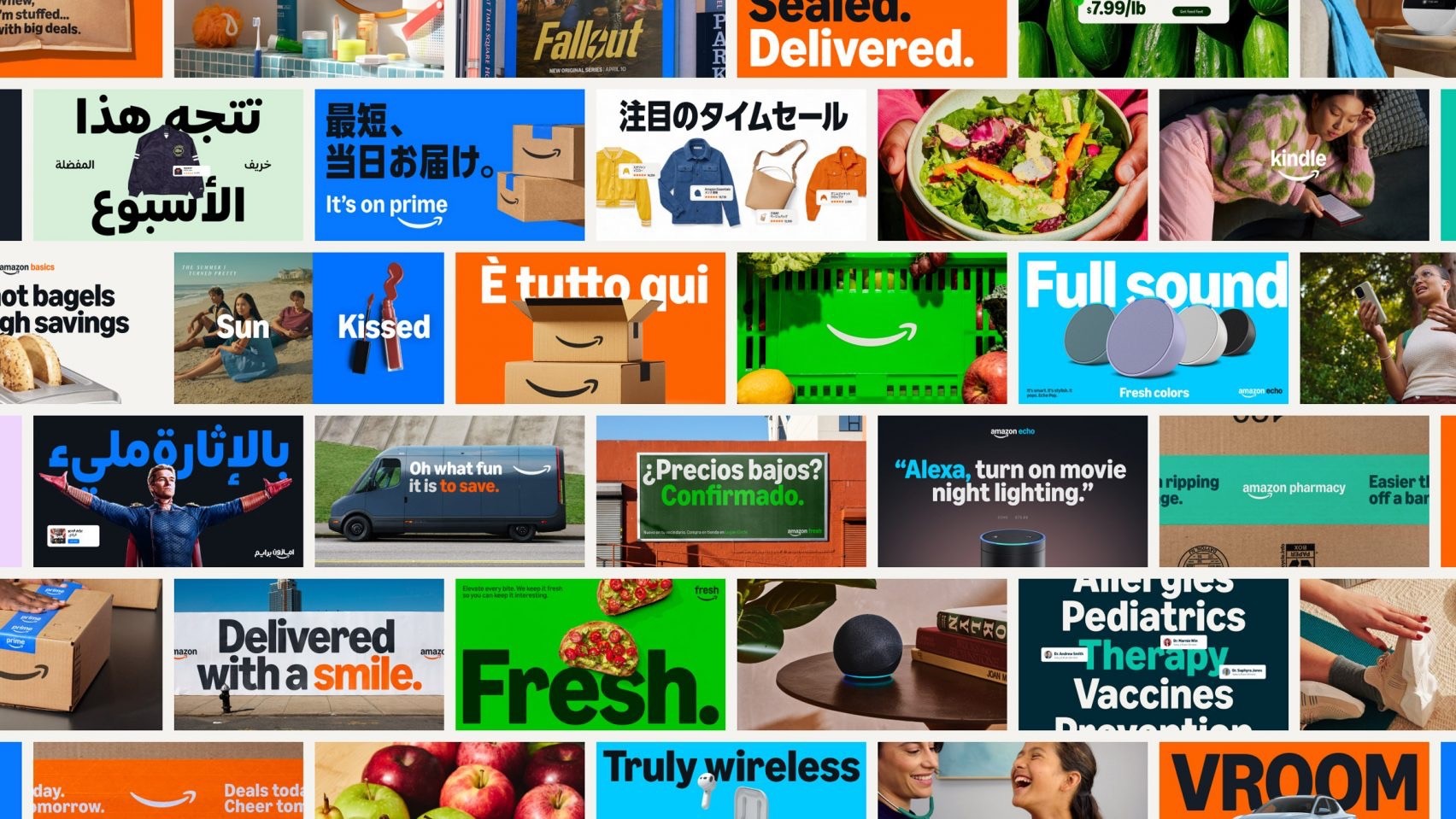
Amazon today is almost unrecognisable from the company that introduced its famous smile logo in 2000. What began as an online bookstore has grown into a global network of businesses spanning ecommerce, entertainment, healthcare, logistics, artificial intelligence, cloud computing, smart home technology, grocery retail, and countless other categories. As the company expanded, many of its products and divisions developed their own visual approaches, creating inconsistencies across the wider brand. Different teams, regions, and business units often operated with varying design systems, resulting in an identity that became increasingly difficult to manage at scale. The challenge facing Koto was not to create a new Amazon but to bring together the many versions of Amazon that had emerged over years of growth and innovation.
One of the most visible aspects of the refresh is the evolution of Amazon's famous smile. Originally designed to represent the idea that Amazon sells everything from A to Z, the logo has become one of the most recognisable symbols in global commerce. Koto's approach was not to reinvent this asset but to strengthen it. The updated smile features a deeper and more expressive curve, placing greater emphasis on warmth, positivity, and customer experience. While the adjustment may appear subtle, it reflects a sophisticated understanding of modern branding. The strongest brands rarely abandon their most valuable assets. Instead, they identify opportunities to refine them in ways that strengthen recognition while making them more relevant for the future. By preserving the familiarity of the smile while enhancing its emotional impact, Amazon has managed to modernise its identity without sacrificing the trust it has built over decades.
Although the logo update has attracted significant attention, the real achievement lies in the system that sits behind it. Koto has developed a unified brand architecture capable of bringing together more than 50 Amazon sub brands under a single visual framework. Services such as Prime, Alexa, Amazon Fresh, Amazon Pharmacy, Amazon Basics, and Amazon Essentials can now operate within a more coherent ecosystem while still maintaining their individual functions and personalities. Achieving this balance is one of the most difficult challenges in modern branding. A system that is too rigid can limit creativity and innovation, while a system that is too flexible can lead to fragmentation and inconsistency. Amazon's refreshed identity appears to strike this balance effectively, creating a structure that feels connected while still allowing individual products to retain their distinct roles within the wider business.
The importance of this work extends far beyond aesthetics. At Amazon's scale, branding is not simply about appearance. It is about creating operational efficiency across thousands of teams and countless customer interactions. Every improvement in consistency helps streamline communication, reduce complexity, and strengthen recognition across global markets. A well designed brand system enables organisations to move faster, launch products more efficiently, and maintain a stronger connection with customers regardless of where or how they encounter the brand. This is why the project should be viewed as a business transformation as much as a design project. The visual outcomes are important, but the infrastructure supporting them is where the greatest long term value is created.

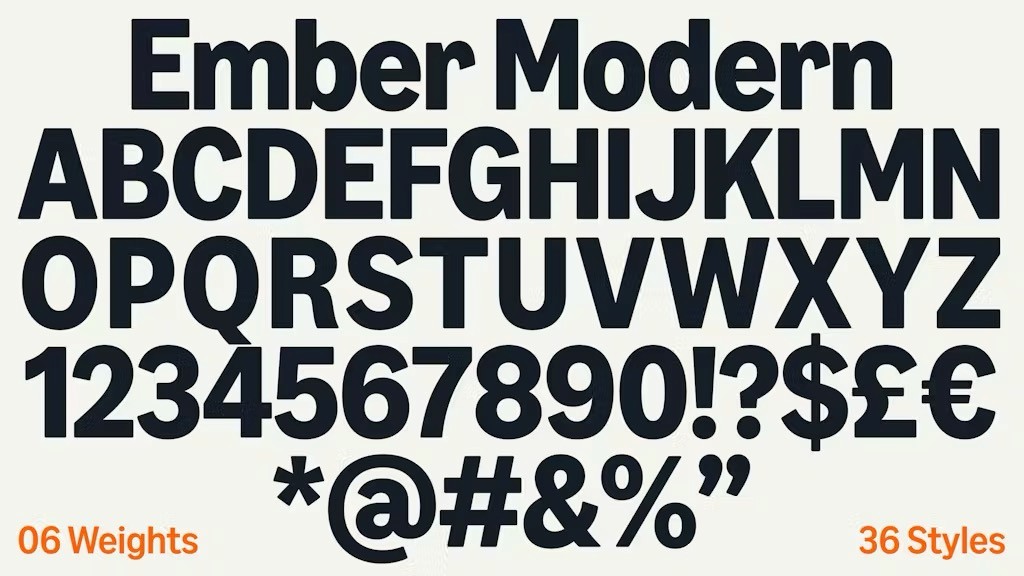
Another significant component of the refresh is the introduction of Ember Modern, a new custom typeface developed to replace a fragmented collection of fonts used throughout Amazon's ecosystem. Designed to support hundreds of languages and function across a wide variety of digital and physical environments, the typeface creates a more cohesive experience across everything from product interfaces and advertising campaigns to packaging and retail environments. While typography rarely receives the same level of public attention as a logo, it plays a crucial role in shaping how a brand is perceived. For organisations operating on a global scale, typography becomes a foundational element of communication, helping to create familiarity and consistency across different markets, cultures, and platforms.
Amazon's investment in typography reflects a broader shift in how leading organisations approach branding. Increasingly, successful brands are recognising that identity is not defined by a logo alone. Instead, it is created through the combination of multiple elements working together as a cohesive system. Typography, colour, imagery, motion, tone of voice, and user experience all contribute to how a brand is understood and remembered. By strengthening these foundational components, Amazon has created a more resilient identity capable of supporting future growth and adaptation.

Perhaps the most interesting aspect of the refresh is how understated it feels. In an era where rebrands are often designed to generate immediate attention through dramatic visual changes, Amazon's approach reflects a growing trend towards what many designers refer to as the quiet rebrand. Rather than seeking short term publicity, these projects focus on long term effectiveness. The goal is not to appear radically different but to function more effectively across every aspect of the business. This philosophy can be seen throughout Koto's work, where every decision appears to have been driven by scalability, usability, and future readiness rather than visual novelty.
The result is a brand that feels more organised, more cohesive, and more capable without losing the familiarity that customers already associate with Amazon. While many consumers may never consciously notice the changes, they will experience the benefits through a more consistent and seamless interaction with the brand. This is often the hallmark of successful branding. The best identity systems do not draw attention to themselves. Instead, they create experiences that feel intuitive, natural, and effortless.

There is also an important lesson here for businesses of all sizes. Many organisations approach branding as a visual exercise focused primarily on logos, colours, and marketing materials. Amazon's refresh demonstrates that effective branding is ultimately about creating systems that support growth. The strongest brands are not necessarily the most visually disruptive. They are the ones that create clarity, consistency, and confidence across every customer interaction. Whether a company serves thousands of customers or billions, the principles remain the same. A strong brand should make communication easier, strengthen recognition, and create a framework that allows a business to scale without losing its identity.
Koto's work for Amazon stands as a masterclass in brand architecture and strategic design. Rather than pursuing change for the sake of change, the agency has delivered a flexible and future ready identity system capable of supporting one of the world's most complex organisations for years to come. The project demonstrates that modern branding is no longer simply about how a company looks. It is about how effectively an organisation can align its products, services, teams, and customer experiences under a single coherent vision. Most consumers may never consciously notice the changes introduced through this refresh, but that is precisely what makes the work so successful. When branding is executed at the highest level, it feels effortless, and Amazon's latest evolution is a powerful reminder that the most effective transformations are often the ones that happen quietly.
Stay connected with us
Learn more about high-performance web design—follow us on Twitter and Instagram.